Author Archives: Gemma Todd

Mental Wellbeing and Resilience in the Workplace

In today’s fast-paced and demanding work environment, mental wellbeing has become significant focus for most businesses. The pressures people experience in the workplace can affect mental ‘wellness’ which can, if not addressed, lead to mental ill-health. View our webinar, “Mental Wellbeing and Resilience in the Workplace,” where Sue Porter, our wellbeing partner, takes a deeper look into mental wellbeing and how evolving greater resilience can support general mental wellness. Discover practical strategies and techniques to effectively identify the difference between mental wellbeing and mental ill-ness, how to build resilience, and what can support the creation of a healthier work-life balance. Taking positive strides towards greater mental wellbeing should be at the top of every organisations agenda especially in today’s world.

In this webinar we discussed

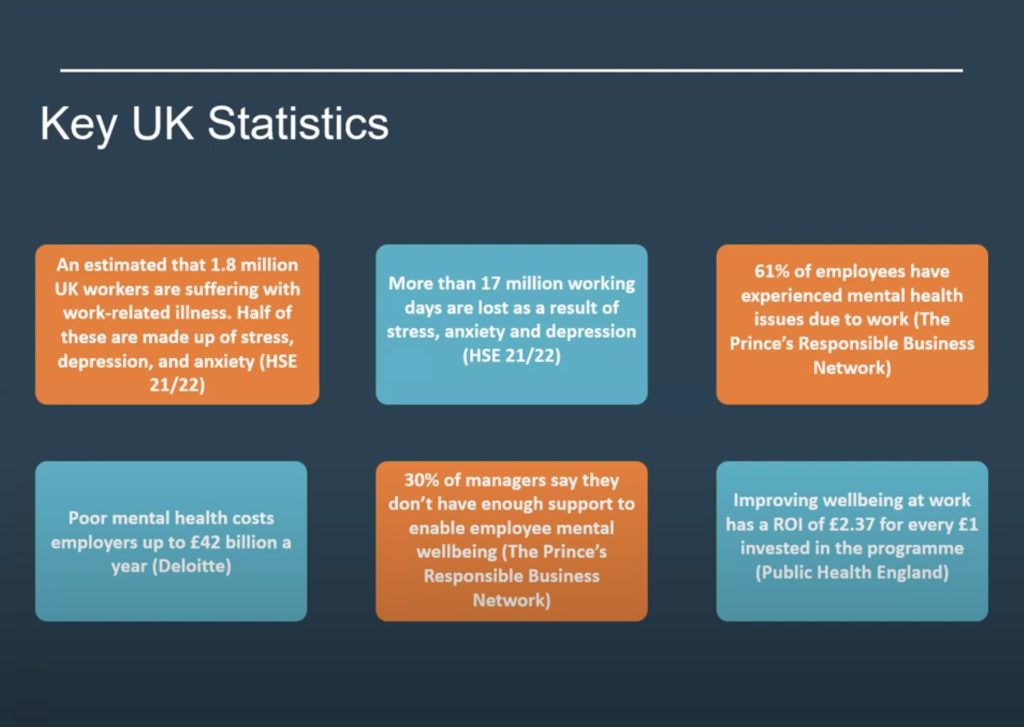
We looked at the statistics surrounding the impact of mental ill-health in the workplace, the means to differentiate between mental wellness and mental ill-health and explore how developing greater resilience can support stronger mental abilities to cope with life’s stresses and strains.

Contact Kingswood Group

For a confidential, no obligation discussion about our webinar, please contact us 01245 204450 or email enquiries@kingswoodgroup.org

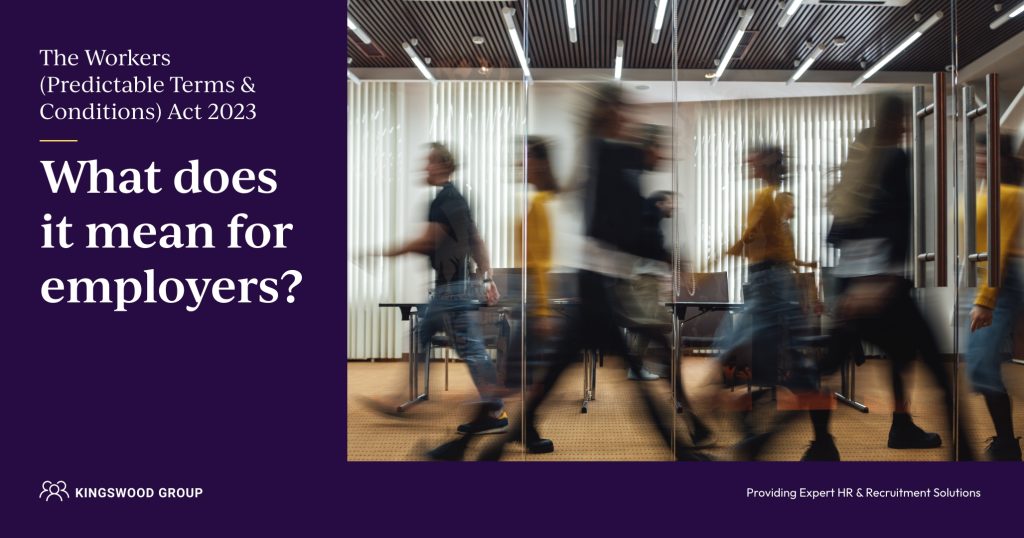
The Workers (Predictable Terms and Conditions) Act 2023 – what does it mean for employers?

The Workers Predictable Terms and Conditions Act 2023

The Workers Predictable Terms and Conditions Act 2023

The Workers (Predictable Terms and Conditions) Act 2023 has received Royal Assent and is expected to come into force in September 2024. It introduces a new statutory right for atypical workers to request a more predictable working pattern by promoting constructive conversations between workers and employers regarding their working patterns..

The new law addresses issues related to atypical contracts, including zero-hours contracts, by providing more predictability in working hours.

Under this new law, workers can formally apply to change their working pattern to make it more predictable if their existing pattern lacks certainty in terms of hours or times worked or if they are on a fixed-term contract for less than 12 months. Employers must respond to such requests within one month.

Acceptance of requests will lead to more predictable terms and conditions for workers, enhancing job satisfaction and potentially resulting in better staff retention.

These include support for employee parents of newborn babies admitted to neonatal care, ensuring fair treatment of tips and service charges, enhanced protection for pregnant women and new parents, provisions for unpaid carers, and the right for millions of employees to request flexible working conditions.

Key points to note include:

  • Worker must have a defined work history with their employer and the qualifying period is likely to be 26 weeks’ service although those weeks will not need to be continuous..
  • The right will apply to the following:
    • workers whose existing working patterns lack certainty in terms of the hours or times they work;
    • workers on fixed-term contracts of 12 months or less (who are able to request a longer fixed-term or the removal of any provisions relating to fixed-term);
    • agency workers (who can make their request either to the agency or the hirer provided they meet certain qualifying conditions)
  • A maximum of 2 applications can be made in any 12-month period
  • The application must specify the change being applied for and the date it should take effect. The requested predictability could relate to hours of work, days of work or period of engagement.
  • Employers will be required to deal with any requests in a reasonable manner and notify the worker of their decision within one month.
  • Requests may be refused on any of several specified grounds. There are currently six listed in the Act, including the burden of additional costs or there being insufficient work during the periods the worker has asked to work.
    • It is important to note that the Secretary of State reserves the right to add more grounds so the list of grounds for refusal may expand.
  • If a request is granted then employers must offer the new terms within two weeks of granting the request.
    • Employers cannot make detrimental changes to other contractual terms at the same time as making the changes required as a result of the approved request for predictability.

Acas will be producing a draft Code of Practice for public consultation in the Autumn which will provide guidance on how to handle requests.

At Kingswood Group, as the ‘go to’ HR service and support provider, we will continue to monitor the situation, and will keep our clients and contacts informed as we learn more about the new Code of Practice and its consultation.

In the meantime, if you have any questions about this, or any other HR or ER related matter, please do not hesitate to contact us on 01245-204450 or HR@kingswoodgroup.org.

Managing People Effectively: Key HR Recommendations for UK Employers

In today’s rapidly evolving business landscape, effective people management is paramount to the success of any organisation. The United Kingdom, with its diverse workforce and dynamic economic environment, presents both opportunities and challenges for employers when it comes to human resources (HR) management. In this article, we will explore essential HR recommendations for UK employers to create thriving workplaces and ensure compliance with legal regulations.

Employment Law and Compliance: Navigating the Legal Landscape

Understanding and adhering to employment laws is foundational for UK employers. The UK has a comprehensive set of regulations governing areas such as employment contracts, working hours, discrimination, and health and safety. It is imperative for employers to stay informed about these laws and to regularly review their policies to ensure compliance. Engaging legal counsel or partnering with HR consultants can help navigate the intricacies of the legal landscape.

Employee Engagement and Wellbeing: A Happy Workforce is a Productive Workforce

Employee engagement is the cornerstone of a successful organisation. UK employers should focus on creating an environment where employees feel valued, motivated, and supported. Regular feedback, recognition programs, and opportunities for skill development can enhance engagement. Prioritizing employee wellbeing, both physical and mental, is equally important. Wellness initiatives, flexible work arrangements, and mental health support can contribute to a happier and more productive workforce.

Equality, Diversity, and Inclusion (EDI): Fostering an Inclusive Workplace

Equality, diversity, and inclusion (EDI) have gained significant importance in recent years. UK employers should actively promote diversity at all levels of the organisation. This involves creating policies that prevent discrimination, ensuring diverse representation in leadership positions, and fostering a culture of inclusivity. Training programs that address unconscious bias and encourage open conversations about EDI topics can contribute to a more harmonious workplace.

Talent Acquisition and Retention: Finding and Keeping the Right People

Recruiting and retaining top talent is a constant challenge for UK employers. To attract skilled individuals, employers should clearly communicate their company values, growth opportunities, and unique benefits. Streamlining the recruitment process, utilising online platforms, and conducting thorough interviews can help identify the best candidates. Once onboard, offering ongoing training, career development plans, and competitive compensation packages are key to retaining valuable employees.

Remote and Flexible Work Policies: Adapting to Changing Work Dynamics

The COVID-19 pandemic reshaped the way businesses operate, with remote and flexible work becoming the norm. UK employers must establish clear policies that address remote work expectations, communication guidelines, and performance evaluation for off-site employees. Balancing the benefits of flexibility with the need for effective teamwork and communication is a challenge that requires careful consideration.

Performance Management and Feeback: Enhancing Employee Growth

Effective performance management involves setting clear goals, providing regular feedback, and conducting performance discussions. UK employers should encourage a culture of continuous improvement and growth. Regular feedback sessions help employees understand their strengths and areas for development, fostering a sense of ownership in their professional journey.

Training and Development: Investing in Employee Skills

Investing in training and development programs benefits both employees and the organisation. UK employers can offer a range of learning opportunities, from workshops to online courses, that align with individual career goals and business needs. These initiatives not only enhance employees’ skills but also contribute to higher job satisfaction and employee loyalty.

In conclusion, managing people effectively in the UK requires a multifaceted approach that considers legal compliance, employee engagement, diversity and inclusion, talent acquisition and retention, evolving work dynamics, performance management, and continuous learning. By implementing these HR recommendations, UK employers can create a positive and productive work environment that attracts, retains, and nurtures top talent, positioning their organisations for long-term success in an ever-changing business landscape.

Flexible Working Arrangements: What is changing?

Since its introduction in April 2003, flexible working has become increasingly common in the UK with around 4.3 million employees working flexibly according to the 2022 survey by Statista.

Earlier this year, the Employment Relations (Flexible Working Act) 2023 passed through Parliament and is likely to pass into law in 2024. What this means is that alongside existing obligation, the changes to current practice that the Flexible Working Act will introduce, will become legally binding for all employers in the coming months. There are actions to be taken now, in preparation for the changes becoming law, that every employer should be taking.

It is important to note, that whilst some things are changing, others are staying the same. This communication set outs what is changing and what is staying as it was before.

What will remain unchanged?

  • Under the Employment Relations (Flexible Working Act) 2023:
  • The right to make a flexible working request will not be a ‘day one right’.
    Employees still need to have 26 week’s service before they have the right to make a request.
  • Whilst a ‘day one right’ may be introduced later through secondary legislation, it is not part of this Act.
    • There remains a ‘right to request, not a right to have flexible working’
      The eight statutory business grounds on which an employer is entitled to refuse a flexible working request, will remain, these are:
    • planned structural changes
    • burden of additional costs
    • quality or standards will suffer
    • performance will suffer
    • recruitment of additional staff is not possible
    • work cannot be reorganised among existing staff
    • meeting customer demand will be more difficult
    • lack of work during times the employee requests to work
  • employers still do not have to offer a right of appeal if a flexible working request is rejected, although the ACAS Code of Practice on Flexible Working recommends a right of appeal is offered by employers.
  • There is no requirement that consultation with the employee is substantive or covers the options available; there is no minimum standard of consultation.

What will change?

  • Once this Act comes into force the following changes will take effect:
  • Instead of the employee only being allowed to make one flexible working request in a 12-month period they will have the right under the new Act to make two flexible working requests in any 12-month period.
  • Instead of dealing with a flexible working request within 3 months of receipt, employers will now only have 2 months to process and communicate the outcome of a flexible working request to an employee, unless they have agreed to an extension.
  • Employers are required to ‘consult’ with employees before refusing a flexible working request.
    • However, what consultation must include and how rigorous it should be is not set out in the legislation (see above for what is not changing).
  • Employees will no longer have to set out in their flexible working request the impact any change they request will have on the business or how any negative effects can be mitigated.


What does that mean for you?

It would be prudent for you to familiarise yourself and train your managers, your HR team and any other relevant employees on the new obligations under the Act and to refresh current practices relating to managing flexible working requests. At Kingswood Group we would be happy to run a workshop for your teams on best practice for managing flexible working requests which will incorporate the new legislative changes.

You will also need to update your flexible working policy if you have one in place. Our expert HR Consultants at Kingswood Group can help you with updating your flexible working policy or, if you have no policy in place now, they can draft one that will be fully legally compliant and will be specific to your business.

Why take action now?

Under the Act, more flexible working requests are likely to be made, so you will need to ensure that you are ready for it. You need to ensure not only do you have the right policies and procedures in place, but your leaders and managers are trained ensuring they make consistent and non-discriminatory decisions when dealing with flexible work requests. It is essential that where a flexible working request is rejected, the business has the full back up of documentation and data to justify the decision.

If you would like support, training, or guidance with how to manage flexible working and the imminent changes, our team of expert HR consultants are on standby to help. You can contact us on 01245-204450 or email us on HR@kingswoodgroup.org

Navigating Redundancy with Expert HR Support

Kingswood Group’s Commitment to Supporting Employers through Difficult Times

At Kingswood Group, we understand that managing redundancy can be a challenging and sensitive process for any organisation. As experts in human resources, we are here to provide employers with comprehensive support and guidance throughout the redundancy journey. Our dedicated team is equipped with the knowledge and experience to help organisations navigate the often complex and challenging waters of redundancy with confidence and compliance. With our tailored solutions, we empower employers to manage their redundancy situation with minimal disruption and risk. Trust in Kingswood Group’s HR Support to mnage redundancy with care and precision, enabling you to focus on what matters most – the success and growth of your business.

Putting People First

We recognise how important it is for organisations facing redundancy situations to ‘get it right’ and whilst the process can seem, on the surface, to be a transactional one, Kingswood Group never forgets that it is a process that affects real people, with real lives. We take care to ensure those organisations we work with to manage redundancy do so with empathy, and respect for all those affected. We promote the human side of management, providing employers to not only understand the impact on individuals and the wider workforce, but how to apply the necessary processes and procedures, fairly and confidently to reach a positive outcome for all.

Supporting Employers Every Step of the Way

We work alongside employers when they face the difficult task of having to consider redundancies, offering support and a range of services tailored to meet their specific needs.

1. Planning and Strategy

We work collaboratively with employers to develop a comprehensive plan and strategy that aligns with their business objectives and values. Our team of experts provides insights and advice on various alternatives to redundancies, exploring options such as retraining, redeployment, or other workforce adjustments, with the aim of minimising the impact on staff.

2. Legal Compliance

Adhering to employment laws and regulations is of utmost importance during the redundancy process. Our team ensures that every aspect of the process is legally compliant, to mitigate potential legal risks.

3. Effective Communication

Transparent and compassionate communication is the cornerstone of any redundancy process. We help employers craft well-structured and sensitive communications for all employees. For those directly affected by a proposed redundancy we take care to ensure their communications help them understand the reasons behind the proposal and the available support during the transition period.

4. Redundancy Consultation

During redundancy consultation meetings, we support employers to whatever degree of support they feel they would benefit from. That can see us leading for the employer, a supportive and respectful consultation process or enabling employers to run their own. In all circumstances, we ensure the consultation environment is a place where employees can express their concerns and explore potential solutions.

5. Outplacement Support

Our commitment to the well-being of affected employees extends beyond the redundancy process. Where redundancy is the outcome of consultation, we can offer comprehensive outplacement support, including CV writing assistance, interview skills coaching, and personalised career guidance, helping individuals find new opportunities and embark on the next chapter of their careers.

6. Employee Wellbeing

Recognising the emotional toll that redundancies can take, we provide access to resilience and change management awareness training, counselling services or support groups to assist employees in coping with the emotional challenges they may face.

How we can help

At Kingswood Group, we firmly believe that our success as an HR company is intrinsically linked to the success and well-being of our clients and their employees. In a world where businesses constantly face change and uncertainty, we remain steadfast in our commitment to navigating redundancies with empathy and understanding. Our services are designed to support employers through difficult times, ensuring that the redundancy process is handled with care and consideration for all involved. Together, we can create a more positive and compassionate working environment, even in the face of challenging decisions. Contact us for a confidential discussion on 01245 204450 or email enquiries@kingswoodgroup.org

New Family Friendly Legislation receives Royal Assent

New family friendly legislation aiming to give parents and carers new protections at work, covering leave entitlement and redundancy rules after three Acts (stemming from Private Members’ Bills) received Royal Assent recently.

What are the new protections?

Parents and carers will benefit from the following new protections once in force:

  • Up to 12 weeks of paid neonatal care leave for employed parents whose children are admitted to neonatal care, so that they can spend more time with their baby at what is a hugely stressful time. This is in addition to other leave and pay entitlements such as maternity and paternity.
  • Redundancy protection for pregnant women and new parents with the extension of existing redundancy protections to cover pregnancy and a period of time after parents return to work.
  • A new entitlement for unpaid carers to a week of flexible unpaid leave a year, for employees who are caring for a dependant with a long-term care need. This will enable carers to better balance their caring and work responsibilities, supporting them to remain in employment.

The secondary legislation that will expand on each of these new legislations along with the commencement dates for each Act, will be laid down in due course.

Do you need additional employment law advice?

If you need support with this or any other aspect of general people management or specific areas of employment law, please do not hesitate to call us on 01245 204450 or email on enquiries@kingswoodgroup.org

Embracing Change: New Family Friendly Legislation for Neo-Natal Leave Introduction

As the United Kingdom undergoes significant changes following its departure from the European Union, there are also notable developments in family friendly legislation. One area that has seen revisions is neo-natal leave, which provides crucial support for parents during a challenging time.

Understanding Neo-Natal Leave

Neo-natal leave is a specialised form of leave designed to support parents whose newborn requires intensive care or hospitalisation due to premature birth, medical conditions, or other complications. New family friendly legislation enables parents to be present for their child’s critical early stages while ensuring job security and maintaining a healthy work-life balance.

New Legislation: Extended and Flexible Neo-Natal Leave

The UK has introduced new family friendly legislation to enhance neo-natal leave provisions, offering extended and more flexible options to parents facing these circumstances. The legislation recognises the unique challenges faced by families with infants requiring specialised care and aims to provide additional support during this crucial period.

1. Extended Leave Periods

Under the new legislation, the duration of neo-natal leave has been extended, allowing parents more time to be with their child during hospitalisation. While specific leave periods may vary, the legislation typically provides an extended period of several weeks or months, enabling parents to focus on their child’s care and well-being without the added pressure of returning to work prematurely.

2. Flexible Return-to-Work Arrangements

Recognising the varying needs of parents and the unpredictable nature of neo-natal care, the new legislation emphasises flexible return-to-work arrangements. Employers are encouraged to work closely with parents to establish customised plans that suit their circumstances. This may include phased returns, reduced hours, or remote work options to support a smooth transition back to the workplace.

By offering greater flexibility, the legislation aims to reduce stress and support parents in maintaining a healthy work-life integration, ensuring their child’s ongoing wellbeing remains a top priority.

3. Protection against Discrimination and Job Security

This new family friendly legislation also provides robust protections against discrimination against parents on neo-natal leave. Employers are legally obliged to ensure that employees returning from neo-natal leave are treated fairly and not disadvantaged due to their absence. Discrimination based on pregnancy, maternity, or neo-natal leave is strictly prohibited, helping to foster an inclusive and supportive work environment.

Employees on neo-natal leave have statutory rights to job security, meaning they can return to the same or a similar role without fear of redundancy or unfair dismissal. These measures provide parents with peace of mind, allowing them to focus on their child’s needs without the added worry of job insecurity.

Benefits for Parents and Employers

This new family friendly legislation for neo-natal leave offers numerous benefits for both parents and employers.

For parents, the extended leave period and flexible return-to-work arrangements alleviate the stress and emotional burden associated with having a child in intensive care. It enables parents to actively participate in their child’s care, strengthening the parent-child bond and contributing to the overall wellbeing and development of the newborn.

For employers, supporting employees during neo-natal leave fosters a positive and empathetic workplace culture. By providing flexibility and understanding, employers can retain experienced and valuable employees, reducing turnover and recruitment costs. Embracing neo-natal leave showcases an organisation’s commitment to its employees’ wellbeing and supports a positive employer brand image.

4. New entitlement for unpaid carers to a week of flexible unpaid leave annually.

As part of efforts to support unpaid carers, new family friendly legislation has introduced an entitlement to a week of flexible unpaid leave. This provision recognises the invaluable contribution of unpaid carers and aims to provide them with the necessary flexibility to balance their caregiving responsibilities with work. This unpaid leave allows carers to attend to the needs of their loved ones without the fear of negative repercussions in the workplace. It acknowledges the importance of supporting carers and promoting their wellbeing.

5. Redundancy protection for pregnant women

Redundancy protection for pregnant women is crucial in ensuring their rights and well-being in the workplace. The Equality Act 2010 safeguards pregnant women from unfair treatment, including dismissal or adverse treatment due to their pregnancy or maternity leave. They are given priority in the selection process for alternative positions, and employers are required to provide effective communication and consultation throughout the redundancy process. These protections promote equality, job security, and a supportive work environment for pregnant women.

A Final Word

Family friendly legislation plays a vital role in promoting a healthy work-life balance and fostering supportive deployment policies in the workplace. By embracing flexible work arrangements, implementing parental leave policies, providing childcare support, and cultivating a positive workplace culture, employers demonstrate their commitment to the wellbeing of their employees and their families. The resulting benefits, including increased productivity, employee satisfaction, and improved public perception, make family friendly employment legislation a win-win situation for all stakeholders involved.

Pride 2023 – Building an Inclusive and Diverse Workplace

Human Resources (HR) plays a crucial role in fostering an inclusive and diverse workplace, including supporting and promoting LGBTQ+ (Lesbian, Gay, Bisexual, Transgender, Queer/Questioning, and others) rights and inclusivity.

Pride, often referred to as LGBTQ+ Pride or Pride Month, is an annual celebration held throughout June in recognition of the LGBTQ+ community’s history, achievements, and ongoing commitment to equality.

The HR community can actively engage in promoting LGBTQ+ inclusion in the workplace by implementing various initiatives and practices, such as:

1.Developing inclusive and diverse workplace policies

HR can create policies that prohibit discrimination based on sexual orientation, gender identity, or gender expression. These policies can also address issues such as harassment and bullying, ensuring a safe and inclusive environment for all employees.

2. Providing LGBTQ+ sensitivity training

HR can organise training sessions or workshops to educate employees about LGBTQ+ issues, terminology, and the importance of fostering an inclusive workplace. This training can help create awareness, empathy, and respect among employees.

3.Implementing diversity and inclusion programmes

HR can collaborate with leadership to develop and support diversity and inclusion initiatives that specifically address LGBTQ+ inclusion. This may involve forming LGBTQ+ employee resource groups, providing mentorship opportunities, or organising LGBTQ+ awareness events.

4.Reviewing benefits and policies

HR can review employee benefits and policies to ensure they are inclusive and supportive of LGBTQ+ individuals. This might involve offering domestic partner benefits, gender-neutral restroom policies, or accommodating transition-related healthcare needs.

5.Supporting employee resource groups

HR can actively support and collaborate with LGBTQ+ employee resource groups, providing resources, assistance, and guidance to help these groups foster inclusivity and organise events or activities.

6.Ensuring inclusive recruitment and hiring practices

HR can work towards eliminating bias in recruitment and hiring processes, ensuring that LGBTQ+ candidates are given equal opportunities. This might involve reviewing job descriptions, using inclusive language, and training hiring managers on fair and unbiased recruitment and selection techniques.
By actively engaging with Pride initiatives and incorporating LGBTQ+ inclusive and diverse workplace policies in their practices, HR can contribute to building diverse, inclusive, and supportive workplaces where all employees can thrive and be their authentic selves.

What are the benefits of a diverse and inclusive workplace?

A diverse and inclusive workplace offers numerous benefits, both for individuals and organisations as a whole. Here are some key advantages:

1. Enhanced creativity and innovation:

When you bring together individuals from diverse backgrounds, perspectives, and experiences, you create a rich environment for collaboration and idea generation. Diverse teams are more likely to come up with innovative solutions, as they can draw upon a wider range of knowledge and insights.

2. Improved decision-making:

Inclusive teams tend to make better decisions. By incorporating diverse perspectives, they can identify potential biases, challenge assumptions, and consider a broader range of factors. This leads to more balanced and informed decision-making processes.

3. Increased adaptability and problem-solving:

In a rapidly changing world, adaptability is crucial. Diverse teams are often more flexible and better equipped to handle unexpected challenges. They can draw upon their diverse skills, experiences, and knowledge to find creative solutions and navigate complex problems.

4. Broader talent pool:

Fostering diversity and inclusion helps organizations attract and retain a wider range of talented individuals. By promoting inclusivity, companies can tap into previously untapped talent pools, including individuals from different genders, races, ethnicities, backgrounds, and abilities. This widens the talent pool and allows for a more diverse and skilled workforce.

5. Enhanced employee engagement and satisfaction:

When employees feel included, respected, and valued, they are more engaged and satisfied in their work. Inclusive workplaces foster a sense of belonging and create an environment where individuals can bring their authentic selves to work. This leads to higher levels of employee morale, motivation, and productivity.

6. Improved customer understanding and satisfaction:

Diversity and inclusion enable organisations to better understand and connect with diverse customer bases. By having employees who reflect the diversity of their customer demographics, companies can gain valuable insights, anticipate customer needs, and tailor their products and services more effectively.

7. Better reputation and competitiveness:

Organisations that prioritise diversity and inclusion tend to have a positive reputation and are seen as socially responsible. This can attract customers, clients, and investors who value diversity and are more likely to support businesses that embrace inclusive practices. Additionally, diverse teams can provide a competitive edge by bringing unique perspectives and market insights.

It’s important to note that achieving diversity and inclusion requires ongoing effort, including fostering a culture of respect, providing equal opportunities, and addressing systemic barriers. However, the benefits of a diverse and inclusive workplace make it a worthwhile endeavor for organisations seeking to thrive in today’s diverse and globalised world.



Rest Breaks at Work: You and Your Employer

In today’s fast-paced world, many of us are constantly working and trying to stay productive. We often feel that taking a rest break at work will lead to a loss of productivity and success. However, taking breaks from work is actually crucial for maintaining productivity, creativity, and overall well-being.

What your Employer Must Provide

Under the Working Time Regulations 1998, employers in the UK must provide workers with certain types of rest breaks. For example, workers who work for more than 6 hours per day are entitled to 20-minute rest breaks, which must be uninterrupted and taken away from their workstation.

Working Time Regulations

The law on rest breaks is quite clear:

  • during the working day – 20-minute rest breaks if they’re expected to work more than 6 hours during the day.
  • between working days – 11 hour rest breaks between finishing work and starting work.
  • between working weeks – 24 hours every 7 working days or 48 hours every 14 working days.
  • each year – holiday entitlement 

Employees and workers have the same rights to rest breaks wherever they’re working, for example in a workplace or at home.

Employers who fail to provide required breaks or who discourage or prohibit rest breaks may be in breach of the Working Time Regulations and may face legal action from employees. Employees who feel that their rights have been violated may also be able to make a complaint to the Advisory, Conciliation and Arbitration Service (ACAS) or to an employment tribunal.

It is important for employers to communicate break policies clearly to employees and to ensure that employees are taking the breaks they are entitled to. Employers may also want to consider implementing policies that encourage employees to take breaks and to prioritise their well-being, such as flexible working arrangements or mental health support.

What are the benefits of breaks from work?

Taking rest breaks from work is not only important for employees’ physical and mental health but also for their productivity and creativity. By providing employees with required breaks and encouraging them to take additional breaks when needed, employers can create a healthier, happier, and more productive workforce.

Here are some reasons why taking a rest break is important:

Increased productivity: Taking rest breaks in the workplace can actually increase productivity in the long run. Research has shown that taking regular rest breaks can help reduce fatigue, improve focus and concentration, and boost creativity. By taking a break and stepping away from your work, you can come back with fresh eyes and renewed energy, which can help you work more efficiently and effectively.
Improved mental health: Working non-stop can lead to burnout, which can have negative effects on your mental health. Taking a break can help reduce stress, anxiety, and depression. It gives you time to recharge and refocus, which can improve your overall well-being and mental health.
Better physical health: Sitting in the same position for hours on end can lead to physical problems such as back pain, eye strain, and poor circulation. Taking breaks allows you to stretch your muscles, rest your eyes, and move around, which can prevent these physical problems from occurring.
Improved creativity: When you take a break, your mind is free to wander, which can lead to new ideas and insights. It can also give you time to reflect on your work and come up with new ways to approach problems.
Better work-life balance: Taking breaks from work can help you achieve a better work-life balance. It allows you to spend time with family and friends, pursue hobbies and interests, and take care of yourself. This can lead to a more fulfilling and satisfying life.

Breaks are an Essential Part of Good Business Practice

In conclusion, taking breaks from work is essential for maintaining productivity, creativity, and overall well-being. It’s important to prioritise self-care and take the time to recharge, both mentally and physically. So, the next time you feel like you’re too busy to take a break, remember that it’s actually essential for your success and happiness.

For further information or support, please contact Kingswood Group on 01245-204450 or email us on HR@kingswoodgroup.org

Essex-based HR Kingswood Group Secures New Partnership to Accelerate Growth Plans Across Essex and the South East

Kingswood Group, based in Chelmsford, Essex, has secured its future growth plans thanks to a new partnership with Trygos Capital Partners. This new partnership will inject new capital and support into the business so that it can expand the existing team and add new services to open up new markets and opportunities.

Simon Smith, Director at Trygos Capital Partners said, “We have been looking for some time for an energetic, client focussed, tech-savvy recruitment and HR business to partner and invest in. Sarah and her team have exactly the right focus, skillset, and values to make the company the go-to HR partner for SMEs in Essex and East Anglia.”

Kingswood Group is the brainchild of Sarah McKee-Harris

Sarah formed the company in 2018. Since then the firm has grown rapidly under Sarah’s leadership, supporting hundreds of employers in finding great talent and managing their people.

The business has grown quickly, even through the challenges of the Covid-19 pandemic, where the team provided vital HR advice to businesses struggling with the pandemic’s impact and seeking credible, effective advice.

Sarah McKee-Harris, CEO at Kingswood Group said ‘We are delighted to partner with the management team at Trygos Capital Partners who have been very successful over the last decade in helping similar HR businesses develop outstanding offerings for their customers. Together we want to build the go-to HR advisory firm in our region.”

Sarah continued, “The whole Kingswood team is looking forward to developing our partnership with the Directors and the team at Trygos Capital Partners to deliver our growth plans and drive the business forward. This is an exciting time in the evolution of the business, and we’re looking forward to meeting the challenge.”

Kingswood Group is a leading specialist HR and recruitment solutions provider servicing businesses in all industries across Essex, London, and the South East. The team is located in Essex and works in partnership with businesses and organisations to provide bespoke recruitment, HR outsourcing, and HR consultancy solutions, depending on the people needs of those businesses.

Talk to a HR professional today 01245 204450