
Author Archives: Greg Guilford

Redundancy in 2025: Why UK Businesses Are Cutting Jobs and What SMEs Can Do

Redundancy 2025
Redundancy 2025

Redundancy has become a pressing issue for UK employers in 2025. Between June and August 2025, organisations reduced headcount at a 0.5% annual rate—the fastest pace since 2021. This rise in redundancies is linked to the £25 billion increase in employer National Insurance Contributions (NICs) introduced in April 2025, alongside broader economic pressures.

For small and medium-sized enterprises (SMEs), navigating redundancy is particularly challenging. Unlike larger corporates, SMEs often lack deep financial reserves and HR capacity. Decisions around redundancy can have far-reaching consequences, from employee morale to business reputation. Understanding both the reasons behind rising redundancies and the process to follow is essential for business leaders right now.


Why Are Redundancies Rising in 2025?

1. The NICs Increase

The April 2025 rise in employer NICs has added significant payroll costs. For labour-intensive sectors such as hospitality, retail, and care, this has been especially painful. Employers are being forced to revisit workforce planning, with redundancy emerging as a cost-cutting measure when other efficiencies can’t be found.

2. Economic Uncertainty

Redundancy is often a symptom of broader economic pressures. With inflation, slower consumer demand, and political change all contributing to uncertainty, businesses are freezing recruitment and scaling back wages. In some cases, redundancy programmes are being used pre-emptively to safeguard profitability.

3. Pressures on SMEs

SMEs are particularly vulnerable. They typically operate on tight margins and may not have the luxury of long consultation periods or redeployment opportunities. For many, redundancy decisions are being driven not by choice but by financial necessity. That makes it even more important to consider alternatives before making cuts.


The Impact of Redundancy on SMEs

Redundancy isn’t just a financial decision—it has human, cultural, and legal consequences.

  • Morale: Employees who remain after a redundancy round may feel insecure, disengaged, or resentful. This can harm productivity and retention.

  • Reputation: Poorly managed redundancies can damage an employer’s reputation in the local market, making it harder to recruit in the future.

  • Compliance risks: Mishandling redundancies exposes SMEs to legal claims for unfair dismissal, which can be costly in both time and money.

In short, redundancy might save money in the short term, but without proper planning and process, it can create long-term challenges.


The Redundancy Process SMEs Must Follow

If redundancy is unavoidable, employers must follow a fair and legally compliant process. Cutting corners increases the risk of tribunal claims. The redundancy process typically involves:

1. Establishing a Genuine Redundancy Situation

Redundancy is only lawful if the role is genuinely no longer required—this may be because of reduced demand, workplace closure, or business restructuring. Employers must be able to demonstrate the business rationale behind the redundancy.

2. Consultation

  • Fewer than 20 redundancies: Employers must consult individually with each affected employee.

  • 20 or more redundancies: A collective consultation process is legally required, involving employee representatives or trade unions.
    Consultations must be meaningful. This means genuinely considering alternatives before reaching a decision.

3. Fair Selection Criteria

If only some roles are being made redundant, employers must use objective, transparent criteria for selection (e.g., skills, qualifications, performance, disciplinary records). Discrimination based on age, gender, disability, or any protected characteristic is unlawful.

4. Considering Alternatives to Redundancy

Employers must explore redeployment opportunities, flexible working, or voluntary redundancy. Failure to consider these options can render the process unfair.

5. Notice and Redundancy Pay

Employees with two or more years’ service are entitled to statutory redundancy pay, which is calculated based on age, length of service, and weekly pay (capped at £719/week in 2025). Employers must also give the correct notice period—either contractual or statutory.

6. Right of Appeal and Support

Employees should have the right to appeal redundancy decisions. Providing support such as outplacement services, CV workshops, or wellbeing assistance demonstrates good practice and helps maintain morale among remaining staff.

Important: Failing to follow the redundancy process correctly can lead to claims of unfair dismissal, financial penalties, and reputational damage.


Alternatives to Redundancy

Redundancy should be a last resort. SMEs should carefully consider other cost-saving strategies first:

  • Flexible Working Schemes: Reducing hours, offering hybrid work, or job-sharing can lower costs while retaining skills.

  • Phased Pay Reviews: Instead of large pay rises, implement staged increases linked to company performance.

  • Non-Financial Benefits: Wellbeing initiatives, career development opportunities, or additional holiday days can boost retention at low cost.

  • Payroll Planning: Review NICs obligations and explore any government relief or grant schemes.

  • Scenario Planning: Use workforce modelling to test financial strategies before making redundancy decisions.

By exploring these alternatives, SMEs can often reduce financial pressure without losing valuable employees.


Frequently Asked Questions (FAQs)

Q1. Why are redundancies increasing in 2025?
The April 2025 NICs hike has added £25 billion in costs for employers. Combined with slowing growth, redundancies are being used to cut costs.

Q2. How does redundancy affect SMEs?
Redundancy can provide short-term savings but risks morale, productivity, and legal disputes if not handled correctly.

Q3. What is the redundancy process employers must follow?
Employers must consult staff, use fair and objective selection criteria, consider alternatives, issue proper notice, pay redundancy entitlements, and provide appeal rights.

Q4. What alternatives to redundancy are available?
Options include flexible working, phased pay increases, payroll planning, and offering non-financial benefits.

Q5. What are the risks of mishandling redundancies?
Poorly managed redundancies can result in unfair dismissal claims, reputational harm, and difficulties recruiting in the future.


Conclusion

The rise in redundancies in 2025 shows how economic pressures are reshaping the workforce. For SMEs, redundancy should be seen as a last resort—used only when there is a genuine business need and after all alternatives have been considered.

By following the proper redundancy process and seeking expert advice, SMEs can minimise legal risk, protect morale, and preserve their reputation as fair employers.

At Kingswood Group, we guide SMEs through redundancy planning, consultation, and compliance. Whether you need advice on alternatives, support during consultation, or help managing the redundancy process, we’re here to ensure fair and legally sound outcomes.


Looking for Outsourced HR Services?

Call 01245 204450 to talk to one of our HR professionals today, or use our simple online contact form.

Outsourced HR Services

Building a Resilient Workforce: Strategies for Employee Wellbeing

Employee Well Being

In today’s unpredictable working world, employee wellbeing isn’t just a nice-to-have — it’s a business priority.

With rising absence rates, increased reports of burnout, and continued economic pressures, SMEs are feeling the impact. Building a resilient workforce can help protect your people, reduce risk, and improve performance — even in challenging times.

This webinar will explore how business leaders can develop a practical, sustainable wellbeing strategy that strengthens their culture and supports staff retention.


What the session will cover:

Why resilience matters more than ever

  • The latest data on mental health, absence, and engagement in SMEs

  • Why resilience is more than managing stress — and how it supports performance and retention

Spotting the warning signs

  • Early indicators of burnout, presenteeism and “quiet quitting”

  • How wellbeing issues show up in your team culture and output

Practical tools to support your people

  • Simple, low-cost wellbeing initiatives that make a difference

  • How to make the most of tools like EAPs, mental health champions, and flexible working

Creating a culture of wellbeing and resilience

  • The role of leaders and managers in shaping team resilience

  • Building wellbeing into everyday people policies — including absence and return-to-work


Who should attend?

This session is ideal for SME owners, managers, and HR professionals who want to better support their teams while keeping their business on track.

Register


Our upcoming webinars

What Workers Want: Insights for 2025 and Beyond

Kingswood Group is excited to partner with New Possible to bring you this insightful webinar exploring the key findings from the “What Workers Want 2025” report.

HR Trends 2025: Adapt, Evolve, Thrive

This webinar dives into the top HR trends for 2025, including how the Employment Rights Bill will impact SMEs, and how to stay competitive by adapting to these changes.

Recruiting and Retaining the Right Talent

This webinar is designed to help you attract top candidates, identify underperformance early, and set employees up for long-term success.

Building a Resilient Workforce: Strategies to Support Employee Wellbeing in UK Workplaces

Employee Well Being

Employee Well Being


Building a Resilient Workforce: Strategies to Support Employee Wellbeing in UK Workplaces

In today’s fast-moving, high-pressure business environment, resilience isn’t just a desirable quality it is essential.

For UK businesses, building a resilient workforce goes beyond navigating economic shifts or industry change. It’s about developing teams who can adapt to stress, stay engaged, and support each other—even when challenges arise.

But resilience doesn’t happen by accident. It needs to be nurtured through a clear employee wellbeing strategy, thoughtful leadership, and a culture that prioritises mental, physical, and emotional health.

In this article, we explore what makes a workforce resilient, why wellbeing is the foundation, and what practical steps employers can take to support their people—without breaking the budget.


What Is Workforce Resilience?

A resilient workforce is one that can manage change, handle pressure, and bounce back from adversity.

This doesn’t mean avoiding stress altogether. Instead, it’s about giving people the tools, support, and environment they need to manage it effectively—reducing burnout, boosting morale, and building long-term sustainability in your team.

Resilient teams are:

  • Better equipped to handle uncertainty and organisational change

  • More likely to stay engaged and productive during tough periods

  • Less prone to long-term sickness absence and attrition

  • More collaborative, adaptable, and self-sufficient


The Link Between Wellbeing and Resilience

Workplace resilience starts with wellbeing.

If employees are overwhelmed, unsupported, or lacking basic tools to manage their health, performance and motivation can quickly suffer. In fact, the CIPD’s 2024 Health & Wellbeing at Work Report found that:

  • 76% of employers report stress-related absence in their workforce

  • Over 50% cite mental health as the top challenge impacting productivity

  • Only 27% of organisations have a standalone wellbeing strategy

A proactive approach to employee wellbeing doesn’t just reduce risks—it improves performance, retention, and your reputation as a responsible employer.


Signs Your Workforce May Be Struggling

Not sure where to start? Look for early indicators that your team’s resilience is under pressure:

  • Increased short-term absences

  • Reduced engagement or morale

  • Rising conflict or misunderstandings

  • Staff becoming withdrawn or overwhelmed

  • Feedback in appraisals or exit interviews around workload or support

These signs don’t mean your business is failing—but they are opportunities to act early.


6 Practical Ways to Build a Resilient and Well Workforce

You don’t need a huge budget or a dedicated HR department to make a difference. Here are six realistic strategies for small and medium-sized businesses:

1. Create a Culture of Openness

Encourage regular check-ins between managers and team members. Give people the chance to talk openly about challenges—without fear of judgement.

This can be supported through:

  • Monthly 1:1 meetings

  • Anonymous pulse surveys

  • Training line managers in active listening

2. Offer Mental Health Support

Invest in basic mental health tools, such as:

  • Access to an Employee Assistance Programme (EAP)

  • Mental health first aiders or champions

  • Clear signposting to NHS or charity-based services

If budgets are tight, free resources from Mind, Mental Health at Work, or Acas can still provide great value.

3. Promote Healthy Work-Life Balance

Review your policies on:

  • Flexible working (hybrid, compressed hours, part-time)

  • Time-off allowances and sickness absence

  • Encouraging proper breaks and switching off after work

Burnout thrives in environments where people feel “always on.” Set clear expectations and lead by example.

4. Support Physical Wellbeing

Simple interventions can go a long way:

  • Encourage walking meetings or lunchtime breaks

  • Provide ergonomic equipment or work-from-home guidance

  • Run occasional wellbeing workshops or step challenges

Healthy employees are more focused, motivated, and less likely to experience long-term health issues.

5. Recognise and Reward Contribution

Recognition doesn’t have to be monetary. A simple thank-you, regular feedback, or peer-nominated awards can boost morale and help people feel seen.

When people feel valued, they’re more likely to stay resilient through difficult times.

6. Train Managers to Spot the Signs

Your managers are your first line of defence. Equip them to:

  • Notice early signs of burnout or disengagement

  • Have sensitive wellbeing conversations

  • Refer team members to the right support

We recommend including this in line manager inductions and refreshing training annually.

Explore our Line Manager Training Options »


Embedding Resilience in Your Business Strategy

Wellbeing isn’t a “nice to have”—it’s a strategic priority.

Companies that embed resilience into their culture, policies, and leadership decisions are:

  • More likely to attract and retain top talent

  • Better equipped to manage change or crisis

  • Seen as ethical, future-ready employers

If you’re not sure where to start, begin by auditing your existing support systems, gathering employee feedback, and identifying any quick wins—before designing a longer-term wellbeing plan.

Kingswood Group can help you assess gaps and build a tailored strategy based on your workforce and budget.


Employee Wellbeing
Employee Wellbeing

Final Thoughts

A resilient workforce is not about removing all stress—it’s about creating the right foundation for people to navigate challenges and thrive.

By focusing on employee wellbeing, even in small, meaningful ways, you’ll build a stronger, more engaged and more successful business.

If you’d like to explore how to futureproof your people strategy, our team is here to help.

Contact Kingswood Group Today »


Looking for Outsourced HR Services?

Call 01245 204450 to talk to one of our HR professionals today, or use our simple online contact form.

Outsourced HR Services



The Real Cost of Getting HR Wrong (and How HR Outsourcing Can Help Your SME)

HR Outsourcing

HR Outsourcing

For many small and medium-sized business owners, HR Outsourcing is often treated as a back-office function — something to manage internally or delegate informally. But in reality, getting HR wrong can carry serious financial, legal, and reputational consequences.

What starts as a simple issue — a delayed contract, a poorly handled grievance, an inconsistent performance review — can quickly spiral into costly disputes, disengaged teams, and talent loss. And these issues aren’t just disruptive — they’re avoidable.

In this article, we explore the true risks of ineffective HR practices and outline how HR outsourcing can give your business the protection, professionalism, and people strategy it needs to thrive.


What Happens When HR Fails?

1. Mishandling Disciplinary or Grievance Processes Without a fair and consistent approach, you risk employment tribunal claims. Even if a claim doesn’t succeed, the financial burden, reputational damage, and leadership distraction can be substantial.

2. Inadequate or Outdated Documentation Employment contracts, policies, and procedures must be up to date, tailored, and legally sound. Relying on templates or outdated documents exposes your business to unnecessary risk — especially when challenged.

3. Falling Behind on Employment Law Legislation evolves frequently. From flexible working rights to redundancy protocols, being unaware of your obligations can put your business on the wrong side of compliance.

4. Ineffective Recruitment and Onboarding A mis-hire doesn’t just impact performance — it affects team morale and costs valuable time and money. Poor onboarding amplifies the risk and undermines your employer brand.

5. High Employee Turnover and Low Engagement People rarely leave because of the job — they leave because of the experience. A lack of clarity, poor communication, or inconsistent management drives attrition and reduces productivity.


Why Forward-Thinking SMEs Are Choosing HR Outsourcing

HR outsourcing isn’t about replacing your team — it’s about strengthening it. It offers SMEs:

  • Access to qualified HR professionals who understand current legislation and best practice
  • Confidence that every policy, procedure, and contract is fit for purpose
  • On-demand support for complex employee issues
  • Strategic input to support recruitment, retention, and growth planning

By choosing HR outsourcing, business leaders can remain focused on strategic goals, knowing their people operations are handled by experienced professionals.


The Business Case for Professional HR Support

Strategic HR is not a luxury — it’s a lever for growth. By embedding good people practices, you can:

  • Increase retention by creating a positive employee experience
  • Develop internal capability through training and succession planning
  • Reduce legal risk and avoid costly disputes
  • Build a culture that supports innovation and high performance

Strong HR foundations give you stability today — and agility for the future.


Benefits of HR Outsourcing for SMEs

A Smarter Way to Protect and Grow Your Business

HR outsourcing is a proactive investment. It saves time, reduces risk, and empowers you to focus on growth, innovation, and customer service. It also ensures you’re equipped to make informed, confident decisions when it matters most.

What’s the Cost of Doing Nothing?

Waiting until something goes wrong might feel cost-effective in the short term — but it rarely is. Prevention is always better than cure, especially when it comes to protecting your people and your reputation.


Let’s Strengthen Your HR — and Your Business

Kingswood Group specialises in HR outsourcing services for SMEs that want strategic input, expert guidance, and peace of mind.

If you’re ready to take your HR seriously, we’re ready to help.

Explore our HR services ➔


Looking for Outsourced HR Services?

Call 01245 204450 to talk to one of our HR professionals today, or use our simple online contact form to discover how we can assist you.

Outsourced HR Services


How SMEs Can Navigate HR Challenges During Economic Uncertainty

HR Challenges During Economic Uncertainty

HR Challenges During Economic Uncertainty

When times get tough, the first thing many SME owners ask is: how do we protect the business through HR challenges without compromising our people or breaking the law? In today’s rapidly changing business landscape, effective HR management is crucial for sustaining operations and fostering a healthy work environment.

Rising costs, shifting demand, tighter cash flow — economic uncertainty puts pressure on every decision. And often, it’s the people decisions that carry the most risk. Every choice made in HR can have significant ripple effects, so it’s essential to approach these decisions with care and foresight.

That’s why now, more than ever, your HR strategy must be as resilient as your financial one. The way you treat your team during difficult times not only affects morale but also influences their willingness to stay and support the business in the long run. A robust HR strategy can transform challenges into opportunities for growth and engagement.

Why This Matters More Than Ever

During economic turbulence, HR missteps become more visible and costly:

  • Missed legal obligations can result in tribunal claims, which can be financially devastating and damage your reputation.

  • Poor communication leads to fear, gossip, and low morale, which can erode trust within the organisation.

  • Inconsistent decisions erode trust and increase staff turnover, leading to higher recruitment costs and loss of institutional knowledge.

At the same time, good people are watching. They want reassurance, strong leadership, and a sense of belonging. Businesses that get this right won’t just retain their best talent — they’ll stand out as employers of choice. By prioritising employee engagement and wellbeing, organisations can build a loyal workforce that drives success even in tough times.

Key HR Challenges and How to Navigate Them

1. Workforce Planning Under Pressure You might not be hiring, but are your current roles still aligned with your business priorities? In challenging times, it’s vital to reassess your workforce and ensure that every role contributes effectively to your strategic goals.

What to do: Conduct a simple skills and workload audit. Understand who’s doing what, where you’re stretched, and where tasks can be rebalanced. This can help avoid snap decisions that affect service or morale. Consider implementing regular check-ins to remain agile and responsive to changing needs.

2. Managing Change with Confidence Whether you’re reducing hours, merging roles, or pausing pay rises — every change needs to be legally sound and communicated properly. Change can be unsettling for employees, so it’s crucial to handle it with care.

What to do: Don’t guess. Seek HR advice early to ensure your process, paperwork, and timing protect both your business and your people. Transparency in communication is key; explain the reasons behind changes and involve employees in the process where possible.

3. Communicating with Clarity Silence during uncertainty creates anxiety. Employees will often assume the worst if they don’t hear from leadership. Effective communication is essential for maintaining trust and morale.

What to do: Run regular team updates — even if there’s nothing major to announce. Be honest, clear, and available for questions. Create an open-door policy where employees feel comfortable voicing their concerns.

4. Maintaining Morale and Wellbeing on a Budget When financial pressures grow, it’s tempting to park wellbeing initiatives. But this is exactly when your team needs support the most. Investing in employee wellbeing can yield significant returns in terms of productivity and engagement.

What to do: Simple, low-cost actions matter. Promote flexible working, check in regularly, and signpost free mental health resources. Encourage a culture of appreciation; even small gestures of recognition can uplift spirits and foster a positive work environment.

Where Outsourced HR Makes the Difference

When resources are stretched, having the right HR support can help you:

  • Plan changes lawfully and fairly, ensuring compliance with employment laws.

  • Avoid costly mistakes or disputes that can arise from poor HR practices.

  • Communicate with empathy and confidence, reinforcing employee trust in leadership.

  • Keep your people engaged during tough times, fostering a resilient organisational culture.

At Kingswood Group, we specialise in supporting SMEs through uncertainty — with flexible outsourced HR that scales to meet your needs. Our tailored solutions are designed to provide the support you need to navigate these challenges effectively.

You don’t need to face these challenges alone. Let’s put the right plan in place together to empower your business and your people.


Looking for Outsourced HR Services?

Call 01245 204450 to talk to one of our HR professionals today, or use our simple online contact form to discover how we can assist you.

Outsourced HR Services


Fire and Rehire: New Employment Law Changes You Need to Know

Fire and Rehire

Fire and Rehire

With updates to UK employment law on the horizon, it’s essential employers are aware of the upcoming changes to “fire and rehire” practices—and how these may affect how you manage your workforce.

This new legislation could impact how you approach employment contracts, workplace change, and employee relations. Read on to find out what’s changing, the risks involved, and how to stay compliant.


What’s Changing?

The Employment Rights Bill is being updated to include a new clause—Section 104I—which may come into force as early as October 2025.

Under the proposed changes, it will be automatically unfair to dismiss an employee for:

  • Refusing to accept a change to their contract, or

  • Being dismissed and re-engaged (or replaced) on revised terms

This shift aims to curb the use of “fire and rehire” tactics, where employees are pressured into new terms without genuine agreement. You can read the full draft and updates via GOV.UK.


Why Does This Matter for Employers?

The proposed law marks a significant change to how businesses can manage contractual variations.

Even if your current employment contracts include a variation clause, these may no longer be enough to provide legal protection. Employers using dismissal and re-engagement to enforce change could now face:

  • Unfair dismissal claims

  • Employee disengagement and disputes

  • Reputational damage

For a wider overview on this topic, visit ACAS guidance on changing employment contracts.


Real-World Scenarios at Risk

You’ll now need thorough consultation and employee agreement before making changes such as:

  • Adjusting working hours or shift patterns

  • Removing or revising bonus or commission schemes

  • Changing job roles, responsibilities, or work locations

These scenarios could carry high risk if not managed correctly. If you’re unsure, our HR Management Solutions provide the expert advice and guidance you need to handle such transitions safely.


What You Should Do Now

To prepare your business for these changes and reduce legal risk, we recommend:

  • Review employment contracts
    Make sure your variation clauses are up to date. Don’t rely on them alone—seek tailored support with our HR Consultancy services.
  • Plan ahead
    If you anticipate needing changes, start planning and consulting early.
  • Keep a paper trail
    Document your rationale—particularly if financial hardship or business restructuring is behind the proposed change.
  • Consult and communicate
    Open dialogue with employees or their representatives is essential. Take time to reach mutual agreement.
  • Take expert advice
    The risk of unfair dismissal is real. Speak to our team before you make any changes—visit our Contact Page or call us on 01245 204450.

We’re Here to Help

Navigating evolving employment law can be complex—but you don’t have to do it alone.

At Kingswood Group, we offer tailored HR Consultancy, document review support, and practical advice to help you manage change with confidence.


Looking for Outsourced HR Services?

Call 01245 204450 to talk to one of our HR professionals today, or use our simple online contact form.

Outsourced HR Services

Unlocking HR Insights: Kingswood Group Salary Survey

Salary Survey

Salary Survey

Navigating today’s competitive job market requires accurate and up-to-date data. The Kingswood Group Salary Survey provides valuable insights into HR salaries and trends across Essex and the surrounding areas, empowering businesses to make informed decisions about attracting and retaining talent.

Key Trends in the HR Market

The survey highlights several important trends shaping the HR landscape:

  1. Growing Demand for Specialists
    Roles in Talent Acquisition and Reward Analysis are increasingly sought after as businesses compete for the best talent in a tightening labour market.

  2. Sector-Specific Variability
    Salaries can differ significantly by industry, with financial services and technology sectors often offering higher pay ranges compared to others.

  3. The Rise of Flexible Working
    Remote and hybrid working options have shifted from being a perk to an expectation. Businesses offering these arrangements are more likely to secure top-tier candidates.

  4. Enhanced Benefits on the Rise
    Competitive benefits packages—including private healthcare, performance bonuses, and additional holiday allowances—are becoming essential for retaining staff.

Why These Trends Matter

Understanding these trends allows employers to benchmark their offers against market norms, helping them stand out in a competitive landscape. Offering the right combination of salary, benefits, and flexibility not only attracts skilled professionals but also builds loyalty and reduces turnover.

Explore the Full Salary Data

The survey provides detailed salary benchmarks for a wide range of HR roles, from entry-level positions to senior leadership. These insights are invaluable for employers reviewing their remuneration strategies or planning future recruitment.

For a complete overview of HR salaries and trends, download the full Kingswood Group Salary Survey, included with this article.

By leveraging this data, businesses can make informed decisions to stay competitive in attracting and retaining HR talent in the East of England.

To download the full survey, please click here: Kingswood Salary Survey

Looking for Outsourced HR Services?

Call 01245 204450 to talk to one of our HR professionals today, or use our simple online contact form.

Outsourced HR Services

Men’s Health in the Workplace (for employers)

https://youtu.be/AXzCfwOjnqM

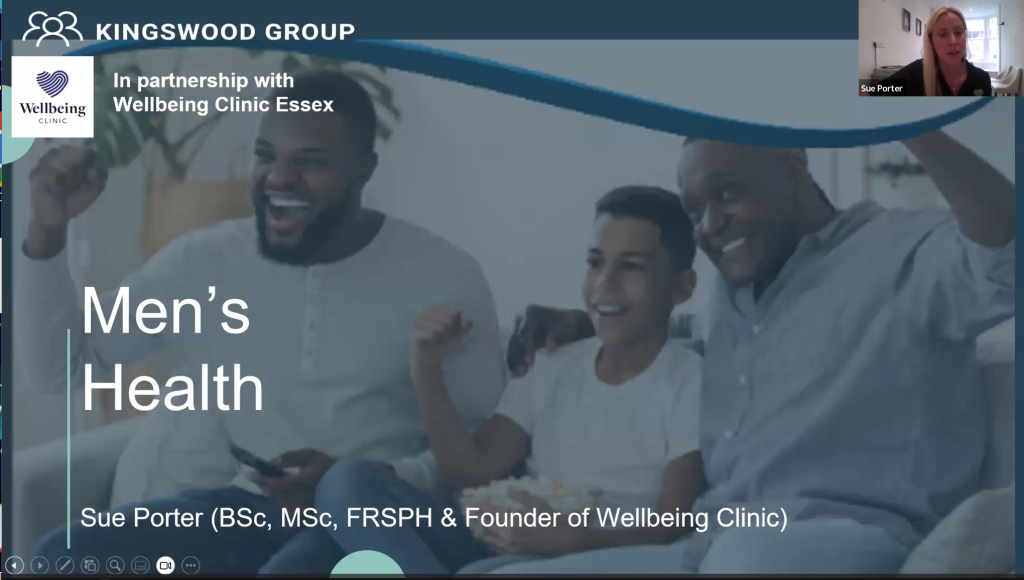
In this webinar Sue Porter (BSc, MSc, FRSPH) from the Wellbeing Clinic Essex shares insight into Men’s health and highlights risk factors for Men’s health, what signs and symptoms to look for, as well as how to get tested and treated promptly.

In this webinar we discussed

UK Statistics show that men see their GP half as often as women do, which is a concerning reality, especially when considering more than 4 in 10 cancers are preventable.  Prostate cancer is the most common cancer in men with more than 30,000 diagnosed each year in the UK. Sue discusses the signs and symptoms in later stages and how a simple blood test can detect prostate cancer early.

Testicular Cancer affects 1 in 250 men, mostly common in men aged between 20 to 34 and is one of the most treatable cancers if caught early. Sue discusses the signs and symptoms and impresses the importance of regular checking, as well as how and when.

In the UK, 1 in 6 men die from heart disease. Sue discusses the risk factors and how men can make small lifestyle changes before experiencing a cardiac event to improve their heart health.

Between age 40-60 testosterone levels in men suddenly drop significantly causing stress, reduced libido or motivation, sometimes weight gain and mental ill health. This male hormone fluctuation is known as ‘andropause’ and can significantly affect men in their day to day lives and in their performance at work. Sue shares more information on diagnosis and treatment.

Sue closes by discussing how men have a completely different hormonal system which can cause them to compartmentalise stress (harder to spot signs) and react more aggressively. Stress can cause constant fatigue and burnout, often with signs manifesting in the workplace. 1 in 8 men have a diagnosed mental health condition and suicide is the biggest cause of death in men under 45, making it a highly important topic to end this highly informative webinar.

Contact Kingswood Group

For a confidential, no obligation discussion about our webinar, please contact us 01245 204450 or email enquiries@kingswoodgroup.org


Client Satisfaction Survey Results – October 2024


At Kingswood Group, we believe that exceptional client service is at the heart of what we do. This commitment was validated by the recent results from our Client Satisfaction and Feedback Survey conducted in October 2024, with overwhelmingly positive responses reflecting the quality of our support and dedication.

Highlights from the Survey

Our clients rated their experiences across key service areas, demonstrating that our commitment to excellence is well-recognised:

  • Overall Satisfaction: A remarkable 95% of respondents rated their overall satisfaction as “very satisfied,” with frequent commendations for our team’s responsiveness and knowledge.

  • Service Quality and Expertise: Kingswood Group prides itself on providing reliable, informed guidance tailored to our clients’ specific needs. According to the survey, 100% of respondents expressed high satisfaction with the quality of service, professionalism, and our team’s understanding of their unique business contexts.

  • Ease of Communication: An impressive 90% of clients found it “very easy” to reach their dedicated consultants whenever they needed support. Our team’s proactive communication and fast response times were consistently highlighted as standout features.

  • Personalised Support: Kingswood consultants were frequently praised for their adaptability and personal touch. Over 85% of clients specifically mentioned the tailored advice they received, highlighting how our team goes beyond standard solutions to meet specific needs.

  • Interest in Additional Services: As our clients’ businesses grow, many are looking to expand the range of HR services we provide. 60% of clients expressed interest in exploring additional services, including employee well-being, compliance management, and recruitment services, showing a demand for a broader partnership with Kingswood.

Continuous Improvement

Our survey also asked clients for suggestions on potential areas for improvement. A few respondents noted a desire for slightly more concise communication in complex advisory emails, and we are actively working to streamline this area. We take all feedback to heart and are committed to making any adjustments that enhance our clients’ experience.

Going Forward

We are immensely proud of these results, which reaffirm our dedication to supporting clients in meaningful and impactful ways. Our team will continue to build on this strong foundation, ensuring that Kingswood Group remains a trusted partner that clients can rely on for strategic HR solutions.

We extend our gratitude to everyone who took part in this survey. Your feedback drives our progress, and we look forward to delivering even greater levels of service in the future. At Kingswood, you’re more than just a client – you’re a valued partner.


Looking for Outsourced HR Services?

Call 01245 204450 to talk to one of our HR professionals today, or use our simple online contact form.

Outsourced HR Services


Navigating Sickness Absence – Getting It Right!

https://youtu.be/HIO1nRUkXcM?si=bpUaJtm_2SqGztfO

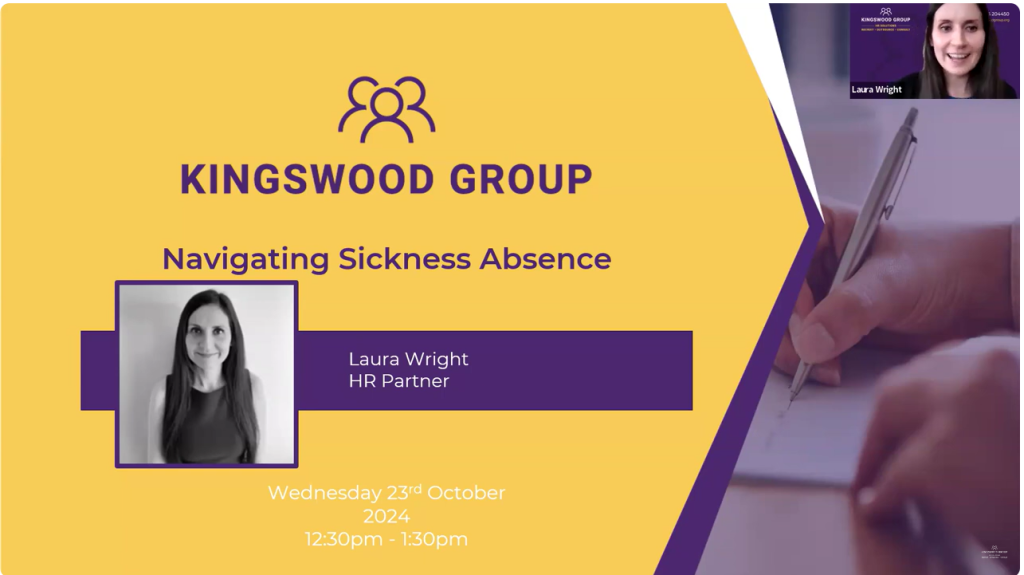
In this webinar Laura Wright, HR Business Partner at Kingswood Group, discusses the importance of effectively managing sickness absences in the workplace along with guidance on how to get it right.

In this webinar we discussed

We begin the webinar reviewing recent sickness absence statistics and the impact on the economy. We consider how recent economic events have influenced an increase in sickness absence and what employers can do to prevent workplace stress.

We discuss the importance of a robust sickness absence policy and procedure, what should be included and how it should be communicated; How to calculate statutory sick pay and the impact of the proposed Employment Rights Bill 2024/25.

We reviewed the use of sickness absence triggers and whether there was a preference over the Bradford Factor Score or the use of occasions to manage absence. In addition, we discussed how return to work meetings are a simple yet effective tool to manage absence in the first instance.

We explored the impact of the Equality Act when managing sickness absence and the application of reasonable adjustments, as well as when to seek further advice, and closed the webinar with a relevant case law example, demonstrating the impact of not adhering to best practice or following your own policies and procedures when managing sickness absence.

Useful links to information we shared during the webinar

  1. CIPD Health & Wellbeing Report 2023 https://www.cipd.org/globalassets/media/knowledge/knowledge-hub/reports/2023-pdfs/8436-health-and-wellbeing-report-2023.pdf
  2. Office of National Statistics – sickness absence in the UK labour market 2022 https://www.ons.gov.uk/employmentandlabourmarket/peopleinwork/labourproductivity/articles/sicknessabsenceinthelabourmarket/2022

Contact Kingswood Group

For a confidential, no obligation discussion about our webinar, please contact us 01245 204450 or email enquiries@kingswoodgroup.org

Talk to a HR professional today 01245 204450